




Testosterone replacement therapy requires regular blood work. The Endocrine Society and American Urological Association both emphasize that monitoring isn't optional. It's how you ensure TRT is working safely.
Why TRT monitoring matters
TRT affects more than testosterone levels. It influences red blood cell production, estrogen levels, prostate tissue, liver function and cholesterol. Monitoring allows your provider to:
- Confirm testosterone is reaching therapeutic levels
- Catch side effects before they become problems
- Adjust dosing for optimal results
- Track markers that affect long-term health
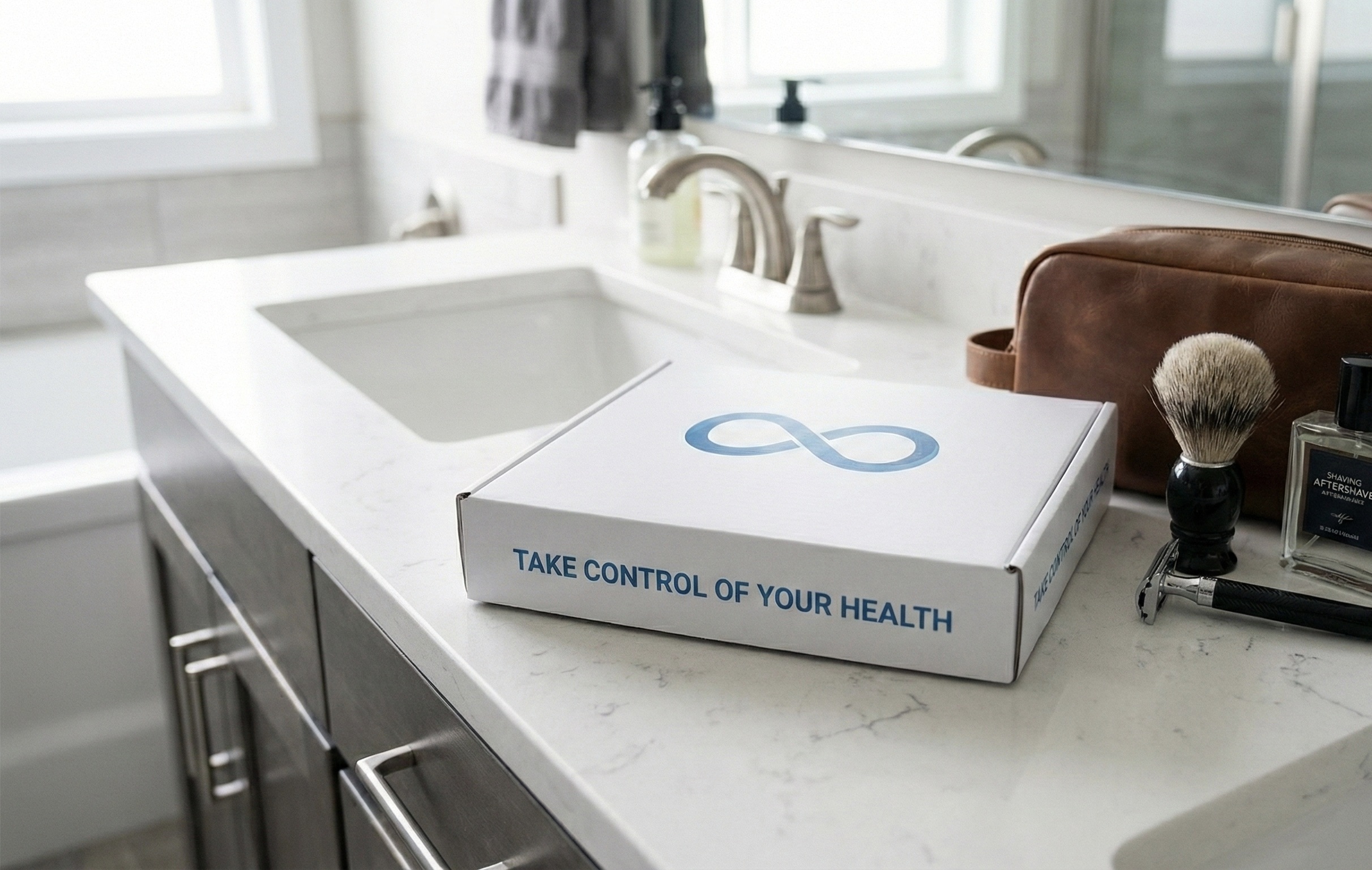
13 biomarkers · Tasso upper-arm collection
Men's Longevity Panel
Hormone, prostate, blood and cholesterol markers in one at-home sample, built to track the values that matter on therapy.
- Hormones
- Total testosterone, free testosterone, estradiol, SHBG, TSH
- Blood and prostate
- Hemoglobin, hematocrit, PSA
- Cardiovascular
- Total cholesterol, LDL, HDL, triglycerides
- Kidney
- Creatinine
At-home collection. Physician-reviewed results in days.
The core TRT blood test panel
Most TRT monitoring panels include several tests. Here's what each one measures and why it matters.
01 / Hormone markers
Total and free testosterone
What it measures: Total testosterone includes all testosterone in your blood, bound and unbound. Free testosterone measures only the unbound portion that's biologically active.
Why it matters on TRT: These tests confirm therapy is raising your levels into the target range. The goal is typically mid-normal, around 450 to 600 ng/dL for total testosterone, though your provider may adjust based on symptoms.
What to watch for: Levels that are too low mean the dose isn't sufficient. Levels above 1000 to 1200 ng/dL may increase side effects without adding benefit.
Estradiol (E2)
What it measures: Estradiol is the primary form of estrogen in men. It's produced when testosterone converts to estrogen through aromatization.
Why it matters on TRT: Higher testosterone can lead to higher estradiol, which can cause water retention, mood changes and breast tissue growth.
What to watch for: Estradiol above 40 to 50 pg/mL may require attention, especially alongside breast tenderness, puffiness or mood issues. Some men function well at higher levels, so symptoms matter more than the number alone.
02 / Safety markers
Hematocrit and hemoglobin
What it measures: Hematocrit is the percentage of red blood cells in your blood. Hemoglobin is the oxygen-carrying protein inside those cells. Both are part of a complete blood count.
Why it matters on TRT: Testosterone stimulates red blood cell production. This is usually beneficial, but too many red blood cells thicken the blood and increase clotting risk. Endocrine Society guidelines call for intervention above 54%.
What to watch for: Hematocrit climbing above 50% is a warning sign. Above 54% typically requires dose reduction, a temporary pause, or therapeutic phlebotomy.
Prostate-specific antigen (PSA)
What it measures: PSA is a protein produced by the prostate. Elevated levels can indicate enlargement, inflammation or cancer.
Why it matters on TRT: Testosterone can stimulate prostate tissue. Research hasn't shown that TRT causes prostate cancer, but monitoring PSA helps catch changes early.
What to watch for: A confirmed rise greater than 1.4 ng/mL within the first 12 months, or PSA above 4.0 ng/mL, requires urological evaluation. Men over 40 should have a baseline PSA before starting TRT.
03 / Long-term health markers
Lipid panel
What it measures: Total cholesterol, LDL, HDL and triglycerides.
Why it matters on TRT: Testosterone therapy can affect cholesterol, particularly HDL. Higher doses are more likely to lower it.
What to watch for: Meaningful drops in HDL or increases in LDL warrant a conversation with your provider about cardiovascular risk.
Comprehensive metabolic panel
What it measures: Liver enzymes such as ALT and AST, kidney markers including creatinine and BUN, blood glucose and electrolytes.
Why it matters on TRT: Oral testosterone, which is rare in the US, can affect liver function. Injectable and topical forms don't typically cause liver issues, but monitoring confirms nothing unexpected is happening.
What to watch for: Significant elevations in liver enzymes require further evaluation. For more on these markers, see our guide to liver function testing.
TRT bloodwork schedule
Guidelines from major medical organizations recommend a specific testing timeline.
| Timeframe | Tests recommended |
|---|---|
| Baseline | Total testosterone (two morning samples), free testosterone, CBC, PSA for men over 40, lipid panel, CMP |
| 3 to 6 months | Total and free testosterone, hematocrit, PSA |
| 12 months | Total and free testosterone, hematocrit, PSA, lipid panel, CMP |
| Annually | Total and free testosterone, hematocrit, PSA, lipid panel |
Some providers test more frequently during the first year, especially when adjusting doses or if baseline hematocrit was elevated.
When to time your blood draw
Timing matters for accurate TRT labs. Testosterone fluctuates through the day and peaks in the morning, so test between 7 and 10 AM for consistency.
For injectable testosterone: on weekly injections, test mid-cycle, three to four days after your injection, for a representative level. Testing just before your next injection shows your lowest level. Your provider may want one or both depending on symptoms.
For gels or patches: test two to four hours after application for peak levels, or before application for trough levels.
Consistency is what makes results comparable. Test at the same point relative to your dosing schedule every time.
Red flags that require attention
- Hematocrit above 54%Requires dose reduction or phlebotomy
- PSA rise greater than 1.4 ng/mL in 12 monthsWarrants urological evaluation
- PSA above 4.0 ng/mLNeeds urological evaluation
- Testosterone well above 1000 ng/dLParticularly without symptom improvement
- Estradiol above 50 pg/mL with symptomsBreast tenderness, water retention, mood changes
- Significant liver enzyme elevationEspecially when using oral testosterone
These findings don't necessarily mean stopping TRT. They signal that adjustments or additional evaluation may be needed.
Additional tests in specific situations
Some men need extra monitoring.
- LH and FSH. Usually only checked at diagnosis. On TRT these will be suppressed, because external testosterone tells the brain to stop signaling the testes. Low LH and FSH on TRT is expected, not concerning.
- Prolactin. Checked if testosterone stays low despite adequate dosing, or if symptoms suggest a pituitary issue.
- SHBG. Affects how much testosterone is available. Useful when symptoms don't match testosterone levels.
- Thyroid function. Worth checking if fatigue persists despite optimal testosterone.
At-home TRT monitoring
Traditional monitoring means scheduling appointments at a clinic or lab. At-home testing offers a practical alternative for tracking between visits.
At-home TRT panels typically include total and free testosterone, hematocrit and hemoglobin, PSA, estradiol, and basic metabolic markers. The process is straightforward: collect a morning sample, mail it to a certified lab, and get results online in days.
At-home testing works well for tracking trends between clinic visits. For comprehensive management you'll still want periodic in-person evaluation, but at-home panels can supplement your schedule and catch changes between appointments.
Frequently asked
How often should I get blood work on TRT?
Can I skip monitoring if I feel fine?
What if my testosterone is high but I still have symptoms?
Do I need to fast for TRT labs?
Can I drink alcohol on TRT?
The takeaway
Consistent monitoring is what separates safe, effective TRT from guesswork. The tests aren't complicated, and the information they provide helps you and your provider optimize treatment while minimizing risk.
Men's Longevity Panel
Testosterone, estradiol, PSA, hematocrit and cholesterol markers in one at-home sample.
$195This article is for educational purposes only and is not medical advice. Work with a healthcare provider to develop a monitoring plan appropriate for your situation.
.png)